Trip Planning
Will I Catch a Fish on My First Guided Fly Fishing Trip?
 Daniel Bowman
Updated May 7, 2026
10 min read
Daniel Bowman
Updated May 7, 2026
10 min read

The short version
Yes — the overwhelming majority of first-time guided fly fishing clients catch their first trout. On Bowman's typical Etowah, Toccoa, or general-water trip, first-timers land their first trout within the first hour and average 4–12 fish over a half-day. Full-day trips average 8–25 fish for first-timers. The guide's job is to put you on water that's holding fish, supply the right gear, teach you what to do, and call the casts in real time. That's why guided first-timer catch rates run dramatically higher than DIY first-timer catch rates. Slow days happen — cold fronts, post-storm muddy water, mid-summer heat — but complete shutouts on guided beginner trips are uncommon. Pick the right water, the right season, and follow the guide's calls. Fish will come.
What "catching a fish" actually looks like for a first-timer
Before talking probabilities, calibrating what a typical first-timer catch looks like helps:
- First fish is usually small. A 9–12 inch stocked rainbow on the Etowah or Toccoa is the typical first guided fish. Wild browns from Noontootla average 8–13 inches.
- First fish often comes within 30–60 minutes of casting. The guide picks high-probability water for the first cast; first-timers often hook a fish before they've fully settled in.
- First fish often comes off. That's normal. Strip-set timing and rod angle take a few attempts to feel right. The guide will count "fish on" before "fish landed" — both matter.
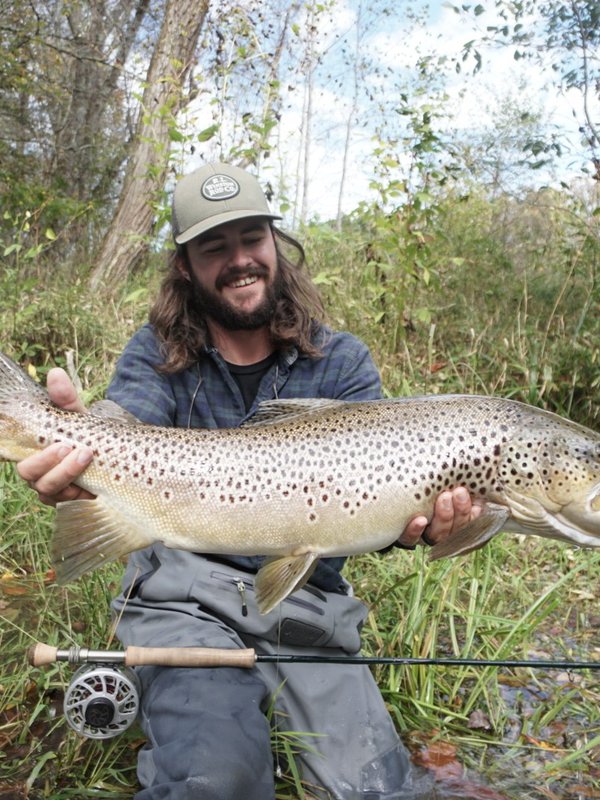
- First fish is photographed. The guide takes a quick photo before release. You will look surprised in it.
- First fish leads to multiple more. Once the casting and setting clicks, fish 2 through 10 come quickly.
The structure of a first-timer's day is rarely "catch one fish, struggle for hours, catch another." It's "first hour is harder, fish 1 happens, then the rhythm kicks in and fish keep coming."
Catch rates by water and trip type
Different water has different catch profiles. For a first-timer:
| Water | Typical first-timer catch (half-day) | Typical first-timer catch (full-day) |
|---|---|---|
| Etowah vineyard private | 6–14 fish | 12–25 fish |
| Toccoa tailwater (general) | 6–18 fish | 12–30 fish |
| Toccoa trophy section | 3–8 fish | 6–15 fish |
| Soque private water | 4–10 fish | 8–20 fish |
| Noontootla Creek | 2–6 fish | 4–12 fish |
| Tuckasegee delayed-harvest | 8–20 fish | 15–40 fish |
For first-timers, the Etowah vineyard private water and the Toccoa tailwater general sections produce the most consistent catch rates with the smallest variance day-to-day. The Soque is technical despite the trophy population; first-time anglers there get fewer fish but bigger ones. The Noontootla is genuinely hard — a 4-fish day there is a good day.
For your first-ever guided trip, the Etowah private water is usually the right answer.
What drives the catch number
Several factors compound on a given day:
1. Water selection (biggest factor for first-timers)
The water the guide picks determines roughly 60% of the day's catch potential. A guide who puts a beginner on the right beat for the conditions almost always produces fish. Bowman's water rotation philosophy is: match the angler to the water that fits today's conditions and skill level, not the angler's preference for a "famous" river.
2. Season
Peak fishing seasons in North Georgia are April–early June and October–November. During those windows, catch rates run 30–60% higher than mid-summer or mid-winter. For first-timers booking a trip without a specific date constraint, picking April–May or October–November optimizes the catch.
Mid-summer (July–August mid-day) and mid-winter (January–February cold snaps) both produce fewer fish per day for any angler, beginner or otherwise.
3. Conditions on the day
- Stable barometric pressure: best
- Falling barometer (storm coming in 12 hours): often excellent
- Rising barometer after a storm: usually slow for 24–48 hours
- High water (post-rain runoff): can be excellent for streamer fishing, slow for nymphing
- Low/clear water (drought): technical, lower catch rates, more spook risk
- Cloudy day with stable temps: usually best
- Bright sun on clear water: technical
A guide reads the day and adjusts. A first-timer doesn't need to understand any of this — just trust the guide's calls.
4. Angler willingness to follow instruction
This is the second-biggest factor after water selection. Anglers who:
- Cast where the guide says (not where they "want to")
- Mend when the guide says
- Set when the guide says
- Stop fishing when the guide says move
…catch dramatically more than anglers who freelance. First-time anglers usually default to following instruction because they're new. Second-trip anglers sometimes start freelancing and the catch rate drops.
5. Casting basics
You don't need to be a good caster on day one. You need to be able to make a 25–35 foot cast that lands somewhere near where the guide pointed. The guide handles reading the water, picking the line, and calling the timing.
That said, 30 minutes of practice before the trip helps. Pick up a rod and reel (or borrow one) and practice the basic cast in a backyard or park. The first hour on the water is more productive when you arrive with rough cast mechanics rather than learning them on the river.
What "no fish" actually looks like
Honesty matters here. Days where a first-timer catches zero fish do happen, even with a good guide.
Typical zero-fish day causes:
1. Severe cold front. Air temps drop 30°F in 24 hours. Fish go inactive for 24–72 hours after the front. You can fish well technically and not get bites.
2. Major flood event. River blown out with mud. Streamer fishing remains marginally possible; nymphing nearly impossible. Catch rates collapse.
3. Mid-summer heat. Water above 70°F and sustained. Trout become stressed and stop feeding. Bowman moves to higher-elevation cooler water in this case, but if the whole region is in a heat wave, options narrow.
4. Pure bad luck. Some days the bite just doesn't happen. Conditions look right, water looks right, fish should be on — they aren't. It's rare but real.
5. Angler-side struggle. Persistent inability to hookset, repeated tangles, refusal to follow guide instruction. Less common but it does happen.
When zero-fish days occur, Bowman guides typically offer a discount on a return trip or a complimentary half-day rebook. The trip cost still applies — guides are paid for time and effort, not outcome — but the relationship continues.
How a Bowman guide maximizes a first-timer's catch
Specific things guides do that matter:
1. Pre-trip water selection. The guide picks the beat the day before based on flow, weather, and recent water reports. First-timers don't get put on the technical Noontootla unless they specifically request it.
2. Pre-trip rig selection. Rods are rigged before the angler arrives — leader length, tippet size, and fly choice are dialed for the day's conditions. The first 10 minutes don't burn on rigging.
3. First-cast positioning. The guide picks a known fish-holding lie for the first cast. First fish in the first 20–60 minutes is the explicit goal.
4. Real-time coaching. "Cast 12 feet upstream of that rock. Mend. Now mend again. SET — set, set!" The guide directs the cast and the timing on every drift.
5. Net work. The guide handles netting and photographing. The angler holds the rod and learns to fight the fish; the guide does everything else.
6. Rotation through productive water. If a pool produces one fish in 8 drifts, move. Beating a slow pool wastes time. Bowman guides rotate aggressively through high-probability water.
7. Rig adjustments throughout the day. Fly changes, leader changes, water changes — the guide reads the response and adjusts. First-timers often don't realize how much rig-tuning is happening throughout the day.
For a complete picture of what to expect on your first guided trip, see the dedicated article.
Common first-timer mistakes that cost fish
Patterns that reduce catch rate:
1. Trout-set instead of strip-set on streamers. Lifting the rod when you feel a streamer hit pulls the fly out of the trout's mouth. Strip-set: pull the line with your line hand, hard.
2. Setting too soft on dry flies. A trout sip on a dry fly looks gentle but the hookset needs to be fast and firm. Hesitation costs the fish.
3. Setting too hard on small dries. Yanking too hard on 6X tippet breaks the fish off. Firm, not violent.
4. Casting too far. First-timers often try to cast 50 feet when 25 feet is what's needed. Short accurate casts produce more fish than long inaccurate ones.
5. Ignoring drag. A dry fly that drags doesn't get eaten. Mending on time is the difference between many fish and few.
6. Wading where the fish are. Stepping into the productive lie before fishing it kills the run. Fish from the bank or fish from below.
7. Looking up when the indicator goes down. The strike happens fast. Eyes on the indicator, ears on the guide, set when called.
The guide will catch most of these in real time. None of them are dealbreakers; they're just the small adjustments that move catch rate from 6 fish to 14.
Catch rate by skill progression
A pattern Bowman guides observe across many first-time clients:
Trip 1 (true first time): Catch rate is moderate. Mechanics are new, instinct hasn't built yet. Most clients land 4–12 fish on a half-day; the wins feel huge because they're new.
Trip 2 (second guided trip, 2–6 months later): Catch rate jumps meaningfully. Casting feels more natural, mending starts to make sense, hookset timing improves. Catch counts often double from trip 1.
Trip 3+ (third trip onward): Catch rate plateaus near "experienced angler" territory for that water. The remaining gains come from more days on the water and learning specific water at depth.
For someone who wants to be reasonably proficient at fly fishing, three guided trips spread over 6–12 months with the same outfitter is the most efficient path.
Best beginner-friendly trip configurations
If you're optimizing for "highest probability of a great first day":
- Best season: Late April through late May. Or early to mid-October.
- Best water: Etowah vineyard private water (most consistent catch rates, lowest variance).
- Best trip length: Half-day. First-time anglers are physically and mentally tired by the 3–4 hour mark; a full-day adds duration without adding much to the experience.
- Best group size: One or two anglers per guide. Solo first-timers get the most attention; pairs work well if both are roughly equal beginners.
- Best day of week: Tuesday through Thursday. Less pressure on public-water access; guides have more flexibility on routing.
- Best weather: Cloudy, stable temperatures, no recent storm. The "perfect" first-trip day is overcast and 65°F.
For trips falling outside these optimums (winter, mid-summer, weekend, etc.), the experience is still good — just slightly more variable. See what's included for what comes with the trip price across any season.
Trout regulations and the first-timer
Most first-time anglers practice catch and release on guided trips, but Georgia regulations allow harvest within creel and length limits on most trout waters. Specific rules at the Georgia Wildlife Resources Division page.
A few notes:
- Bowman guides default to catch and release on trophy water and stocked-but-managed water
- Harvest is fine on general stocked water within state limits
- Special-regulations waters (Noontootla, parts of the Chattahoochee tailwater) are catch-and-release only
- Photos before release are standard
If you want to keep a fish for dinner, mention it when booking. The guide will route you to water that allows harvest and within regulation.
For longer-term involvement in trout fishing in Georgia, the Trout Unlimited Georgia chapter network is the local advocacy and conservation group worth knowing about.
Frequently Asked Questions
Will I catch a fish on my first guided fly fishing trip?
Almost certainly yes. Bowman first-timers land their first trout within the first hour on most trips, and average 4–12 fish over a half-day. Full-day trips average 8–25 fish for first-timers. Complete shutouts happen rarely (once every 30–50 trips) and are usually driven by extreme weather or water conditions, not angler skill.
How many fish should I expect on my first guided trip?
On a half-day Etowah or Toccoa trip in good conditions: 6–14 fish. On a half-day Soque trophy trip: 4–10 fish but bigger average size. On a half-day Noontootla wild-trout trip: 2–6 fish. Full-day trips roughly double those numbers in good conditions.
What if I don't catch anything?
It happens occasionally. If a guided trip produces zero fish despite a fair effort, Bowman typically offers a discount on a return trip or a complimentary half-day rebook. The trip cost still applies because guides are paid for time and effort, but the relationship continues.
Do beginners catch big fish or just small ones?
Both. Most first-timer fish are small to medium (8–14 inches). But trophy fish on guided trips happen — a first-time angler on the Soque River occasionally lands an 18-inch fish, and Bowman guides have client-photo albums full of beginner-caught quality trout. The water and luck matter; size isn't reserved for experienced anglers.
How can I increase my odds of catching fish?
Pick the right water (Etowah vineyard or Toccoa tailwater for first-timers). Book the right season (April–May or October–November). Listen to your guide and follow casting instructions. Practice the basic cast at home before the trip. Show up rested, dressed appropriately, and ready to learn.
Is the Etowah easier than the Soque or Toccoa?
For first-timers, yes. The Etowah's stocked rainbow trout are aggressive and forgiving of imperfect presentations. The Soque holds bigger fish but they're more selective and the casting is more technical. The Toccoa is in between — bigger water, mixed difficulty, drift boat format that helps beginners. For a first guided trip, Etowah is the most consistent choice.
Should I take a casting lesson before my first guided trip?
It's not required. The guide handles casting instruction in the first 10 minutes on the water. But 30 minutes of practice in a backyard with a borrowed rod helps — you arrive with rough mechanics rather than learning them on the river. If you're booking 4+ weeks out, a single 1-hour casting lesson at a local fly shop is a meaningful upgrade. For Atlanta-area shops, look up your nearest Orvis store or Trout Unlimited Georgia chapter for class schedules.
Ready to catch your first trout?
Use our trip finder to lock in the right trip for a first-timer — or call (706) 963-0435.
Find Your Trip or View Rates →