Trip Planning
What's Included in a Guided Fly Fishing Trip in 2026?
 Daniel Bowman
Updated May 7, 2026
10 min read
Daniel Bowman
Updated May 7, 2026
10 min read

The short version
A guided fly fishing trip with Bowman Fly Fishing includes the guide for the day, all fishing gear (rod, reel, line, leader, tippet, flies, net), waders and boots, instruction tailored to your skill level, water access (private water on most beats), transportation between sections during the trip, and photos of your fish sent after the trip. NOT included: Georgia fishing license + trout stamp, lunch (provided on full-day trips, you pack on half-days), snacks and water, polarized sunglasses (a loaner pair is available), and the standard 15–20% tip for the guide. You don't need to buy any fishing equipment for your first trip — everything technical is provided. The total out-of-pocket beyond the trip price is typically $35 (license + trout stamp) plus the tip ($60–$130 depending on trip length).
What's included — the full breakdown
A typical Bowman guided trip is built so anyone with no prior fly fishing equipment can show up, fish a full day, and leave having caught fish. Here's exactly what comes with the trip price:
1. The guide for the day
The guide is the day. You're paying for the relationship with someone who:
- Knows the water you're fishing — current conditions, productive runs, where fish are holding today
- Can teach casting and reading water at whatever level you're at, from never-touched-a-fly-rod to experienced angler refining technique
- Handles every logistical detail — rigging, knots, fly changes, photographing your fish, navigating private-water access
- Reads the day in real time and adjusts strategy as the bite changes
For most first-time anglers, the guide is the difference between catching 10 fish and catching zero. For experienced anglers, the guide is the difference between catching 10 fish and catching 25 — local knowledge translates directly into productive water.
2. All fishing gear
Bowman supplies the complete fishing kit:
- Rods — appropriate for the water and target species (3-weight to 9-weight depending on trip)
- Reels — matched to the rod, pre-spooled with line and backing
- Fly lines — floating, sink-tip, and full-sink lines available depending on the day's needs
- Leaders and tippet — multiple sizes appropriate for the water
- Flies — a full selection of dries, nymphs, streamers, and emergers tied or sourced specifically for the water you'll fish
- Net — guide carries the net; you fight the fish to it
The gear is high-quality. You're not getting beat-up loaner equipment. Most clients are surprised at how nice the rods and reels feel after the rental-grade gear they've experienced elsewhere.
3. Waders and wading boots
Provided in standard sizes. Specify your shoe size when booking and the guide will have boots ready that fit.
A few things worth knowing:
- Waders are breathable chest-high waders — comfortable in any temperature
- Wading boots are studded or felt-soled for traction on slick rocks
- Wading socks — bring your own thick wool or synthetic socks (cotton gets cold and wet)
- Belt is included — wear the wader belt above your waist, always
If you have your own waders and prefer to use them, that's welcome. Most clients use the supplied gear.
4. Instruction tailored to your level
This isn't a casting class or a generic intro. The guide will read your skill level in the first 10 minutes and tailor coaching from there:
- Never fly fished before: Casting basics, reading water, hookset, fighting a fish, releasing it. Pace is patient. The goal is for you to catch fish on day one.
- Beginner with some experience: Refining the cast, learning to mend, reading subtle water, presentation skills.
- Intermediate angler: Targeting bigger or harder fish, technical presentations, switching tactics throughout the day.
- Experienced angler: Local knowledge transfer — where the fish are this week, what flies are working, productive lies most anglers miss.
The instruction is woven into the day rather than delivered as a lesson — you learn while you fish.
5. Water access
Most Bowman trips run on private water. Specifically:
- Etowah vineyard private water — a 2-mile lease with limited weekly pressure
- Soque River private water — the marquee trophy water, exclusive Bowman client access
- Toccoa trophy section — the trophy stretch is largely accessed through guided water permits and private easements
- Public water is fished selectively — usually for novelty, beginner accessibility, or specific seasonal patterns
The private water access is one of the largest unstated values of a guided trip. DIY anglers can fish public water with a license; you cannot fish the Etowah vineyard or Soque private without booking a guide.
6. Transportation between sections during the trip
For float trips, this means the boat itself plus the shuttle from take-out back to the launch. For wade trips on rivers with multiple beats, this means the truck ride between sections during the day.
Specifically:
- Float trips on the Toccoa or Tuckasegee — drift boat, oarsman (the guide), and shuttle handled
- Wade trips on the Etowah, Soque, or Noontootla — drive between productive sections during the day if conditions warrant
- Striper trips — drift boat, gear, and the lower river run
You don't need a separate boat, separate truck, or separate shuttle service. It's all bundled.
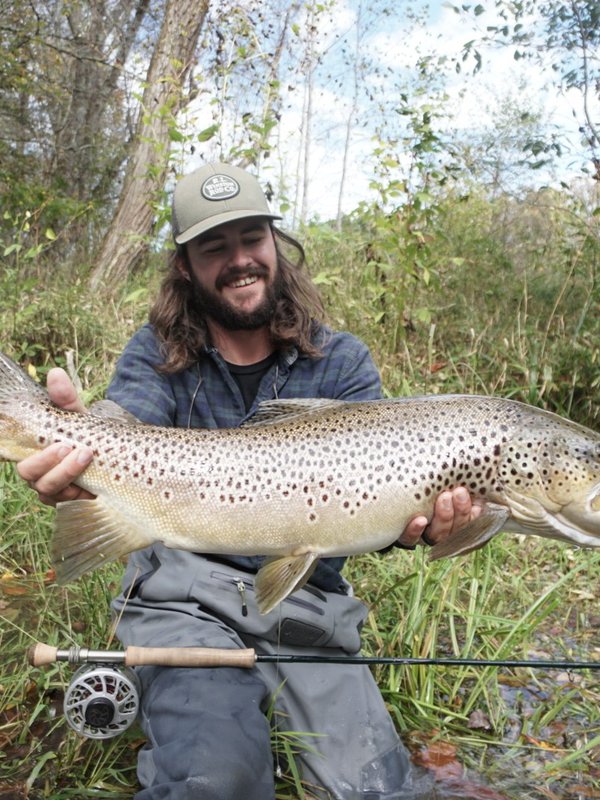
7. Photos of your fish
Standard practice: the guide takes a quick photo of every meaningful fish before release. Photos are sent after the trip via text or email.
This matters more than first-time clients realize. Without a guide, most fly fishing trips produce zero photos because the angler is wet, holding the fish, and trying not to drop it. With a guide handling the camera while the angler holds the fish, you actually get the photo.
What's NOT included
A short list of what you'll need to handle separately:
1. Georgia fishing license + trout stamp
Required by law. Anyone 16 or older needs:
- Georgia fishing license — $15 for a one-day, $25 for an annual resident, $50 for an annual non-resident
- Trout stamp — additional $10 for trout waters (which is what you're fishing)
Total: about $25–$60 depending on which combination you buy. Buy online before the trip at Georgia fishing license at gooutdoorsgeorgia.com. The license is digital — a screenshot on your phone is sufficient. The guide will confirm your license status before launch.
For specific trout regulations (length limits, creel limits, special-regulations stretches), see the Georgia Wildlife Resources Division regulations page.
2. Lunch and snacks
- Full-day trips: Lunch is included — typically a quality sandwich, sides, snacks, and bottled water packed and brought by the guide
- Half-day trips: No lunch, but you'll be off the water before lunchtime if you booked a morning slot, or after lunchtime if you booked an afternoon slot. Bring a snack regardless.
- Hydration: Bring at least one large water bottle. Two on warmer days. The guide also typically packs extra water.
If you have dietary restrictions (vegetarian, gluten-free, allergies), note them when booking and the guide will accommodate.
3. Personal clothing
The guide supplies waders and boots. You supply everything else:
- Layers — synthetic or wool base layer, fleece or insulated mid-layer, light rain shell
- Wading socks — wool or synthetic, never cotton
- Hat — ball cap or wide-brim sun hat
- Polarized sunglasses — essential for seeing fish and protecting eyes from errant casts. A loaner pair is available if you forget; bring your own if possible.
- Sun protection — sunscreen and chapstick
For a complete clothing breakdown, see what to wear.
4. Transportation to the meeting point
The trip price covers transportation during the trip but not getting to the meeting point. You drive yourself to the parking area or trailhead — typically 60–90 minutes from Atlanta depending on the river.
Specific meeting points are sent in the booking confirmation email. Bowman uses public-but-discreet meeting locations — gas stations, parking lots, or trailheads with reliable cell service.
5. The tip
The standard tip for a guide is 15–20% of the trip price in cash, handed to the guide at the end of the trip:
- Half-day at $400: $60–$80 tip
- Full-day at $550: $85–$110 tip
- Trophy-water full-day at $750: $115–$150 tip
A few notes:
- Tip in cash if at all possible. Most guides do not have a clean way to receive Venmo/CashApp tips and cash is preferred.
- Pull cash before you drive up — there are no ATMs near most meeting points
- The tip reflects effort more than outcome. A guide who put you on water and worked the day deserves the standard tip even on a tough fishing day; the weather and fish behavior aren't the guide's fault
- For exceptional service on a great day, 25% is appropriate. For poor service, 10–12% is appropriate. For the standard great day, 18–20% is the norm.
For more on tipping, see tipping etiquette.
Worked examples — total trip cost
Here's the full out-of-pocket breakdown for a few typical scenarios:
Scenario A: First-timer half-day Etowah trip
- Trip price: $400
- License + trout stamp: $25 (one-day non-resident + trout)
- Lunch: pack your own ($0–$15)
- Tip: $70 (17.5%)
- Total: $495–$510
Scenario B: Full-day Soque River trophy trip for two
- Trip price: $750 ($375 per angler)
- License + trout stamp: $50 (two anglers, one-day)
- Lunch: included
- Tip: $130 (17%)
- Total: $930 ($465 per angler)
Scenario C: Tuckasegee float for a couple, full day
- Trip price: $575
- North Carolina license + trout privilege: $30 (10-day, two anglers)
- Lunch: included
- Tip: $100 (17.5%)
- Total: $705 ($352 per angler)
For a full breakdown of what guided trips cost across formats, see the guided fly fishing trip cost article. For half-day specifics, see half-day cost.
What to expect on the morning of the trip
A typical morning runs like this:
- Drive to the meeting point — typically 60–90 minutes from Atlanta. The booking confirmation has the exact location.
- Meet the guide. Quick introductions, brief on the day's plan, review water conditions and weather.
- Get into waders. The guide hands you waders and boots that match your size. You put them on at the truck.
- Walk to the water. Anywhere from 50 yards (vineyard private) to a 25-minute hike (Noontootla).
- Casting refresher. 5–10 minutes of casting in slow water, regardless of skill level. The guide watches, dials in your timing, and answers any questions before you fish.
- First cast on real water. First fish typically comes in the first 30–60 minutes.
The whole day is paced for you to catch fish, learn, and enjoy the water. Pacing is conversational, not rushed.
Group dynamics — couple, family, buddy trips
Trip composition shapes what's actually included in subtle ways:
Couple trip (one rod + a non-fishing partner). A common booking: one person fishes, the other rides along. The non-fishing partner doesn't need a license or gear — they simply tag along, take photos, enjoy the scenery, and rest at the truck or bank during deeper-water moments. Bowman doesn't charge for a non-fishing observer on most trips. This is one of the more popular bachelor/birthday/anniversary configurations.
Family trip (parent + kid). When booking a family trip, specify the kid's age and experience level. The guide will assign a beat that suits the group — typically the Etowah for ages 8–12, with simpler casting and more bites. Kids fish hard for shorter periods; the guide pairs short fishing windows with snack breaks, fish-spotting time, and casual exploration. A half-day usually fits family pacing better than a full-day.
Buddy trip (two friends, both fishing). Two anglers on one guide is the standard maximum group size. Both anglers share the guide's attention; the guide rotates focus, helps with knots, and positions both casters strategically. Most beats handle two-angler groups well; some — like the smaller Noontootla — are better with one angler per guide.
Larger groups (4+ anglers). Bowman splits larger groups across multiple guides, with up to 2 anglers per guide. For corporate, bachelor, or family-reunion groups, the back office coordinates schedules, pickup logistics, and matching guides to skill levels.
How Bowman differs from other outfitters
A few things worth knowing about Bowman specifically vs the alternatives:
- All gear included — no rental fees on top of the trip price. Some outfitters charge $50–$75 separately for waders or rod rental.
- Photos sent after the trip — not all guides do this consistently. Bowman makes it standard.
- Private water access on most beats — many outfitters fish public water exclusively. Private water is a meaningful value adder.
- Honest skill-level matching — beginner anglers get beginner-friendly water; experienced anglers get water that pushes their game. We don't put a first-timer on the technical Noontootla regardless of what they ask for, because the day won't be enjoyable.
- Group size is capped at 2 per guide — guarantees individual attention. Larger groups split across multiple guides.
Frequently Asked Questions
Is fishing gear really included?
Yes — completely. Rod, reel, line, leader, tippet, flies, and net are all supplied. Waders and wading boots are supplied. You can show up wearing street clothes (with a change of socks and shoes) and have everything you need for fishing. The only personal items you bring are clothing, sunglasses, hat, license, and snacks/water.
Do I need a fishing license for a guided trip?
Yes. Georgia (or North Carolina for the Tuckasegee) requires every angler 16 and older to have a valid fishing license, plus a trout stamp/privilege for trout waters. The guide will confirm your license before launch — no license, no fishing. Buy online before the trip; it takes about 5 minutes.
Is lunch included on a guided trip?
On full-day trips, yes — lunch and snacks are packed by the guide. On half-day trips, no — you'll typically be off the water before or after the lunch hour. Bring a granola bar or sandwich either way. Hydration is on you regardless of trip length, though guides usually pack extra water.
What if I have my own gear?
You're welcome to bring it. Many experienced anglers prefer their own rod and reel. Just let the guide know when booking. Most first-time anglers use the supplied gear because it removes the worry of damaging their own equipment in the river.
How much should I tip my fly fishing guide?
15–20% of the trip price in cash is standard. For exceptional service, 25% is appropriate. For a half-day at $400, that's $60–$80; for a full-day at $550, that's $85–$110. Pull cash before the drive — there are no ATMs near most meeting points.
Do guided trips include transportation?
The trip price includes transportation during the trip — drift boat and shuttle on float trips, truck rides between sections on wade trips. You drive yourself to the meeting point at the start of the trip and drive yourself home at the end. Meeting points are typically 60–90 minutes from Atlanta.
Can I bring my kids on a guided trip?
Yes — Bowman runs family-friendly trips on appropriate water. Kids 8 and older usually fish well with proper coaching; younger kids do best with a half-day on the Etowah or another easy beat. Specify ages and experience when booking and the guide will match the trip to the group. See the trip finder for family-trip options.
Ready to book your trip?
Use our trip finder to match a guide, river, and date in under two minutes — or call (706) 963-0435.
Find Your Trip or View Rates →