
North Georgia Rivers
Toccoa River Striper Fly Fishing in 2026: Spring Migration Guide
 Daniel Bowman
Updated May 7, 2026
10 min read
Daniel Bowman
Updated May 7, 2026
10 min read

The short version
Striped bass migrate from Lake Blue Ridge into the lower Toccoa River April through June, with peak fishing in late April and May. Spring stripers are 8–15 pounds typically; some larger fish are caught. Bowman runs striper trips on a separate format from trout trips — heavier 8–9 weight rods, larger streamers (6–9 inches), and focus on the lower river. Half-day striper float: $425. Best windows: peak generation flows in May. Striper trips produce fewer fish than trout trips but the fish are dramatically larger — one 12-pound striper on the fly is the trip-of-the-year for many anglers.
What is the Toccoa striper run?
Striped bass (Morone saxatilis) live in Lake Blue Ridge — the reservoir held back by Blue Ridge Dam. The lake supports a stocked striped bass population managed by Georgia Wildlife. In spring, the stripers migrate up the Toccoa River below the dam to spawn in the running water — replicating the natural anadromous-fish behavior in a freshwater system.
The migration:
- Triggered by water temperatures rising in the Toccoa
- Runs roughly April through June, peaking in late April–May
- Stripers move upstream from the lake into the lower Toccoa miles
- Larger fish stage in deep slots and pools; smaller fish move through faster water
- Some fish run further upstream into the Tailwater section as the season progresses
For Bowman fly anglers, the striper run produces an opportunity not available on most North Georgia trout streams — a chance at 8–15 pound (and occasionally larger) game fish on fly tackle in waters typically known for trout. The trade-off: fewer fish per trip than trout fishing, but each fish is dramatically larger.
Why fly fishing for stripers on the Toccoa works
Five reasons the Toccoa striper run produces fly fishing opportunity:
Concentrated migration. Stripers stage in specific lower-river sections during the migration. Once located, they hold for several days or weeks. Repeat anglers in the run season target the same productive lies.
Aggressive feeding. Migrating stripers feed aggressively to fuel the spawn. Streamers stripped through their staging zones provoke strikes from territorial and feeding fish.
Generation flows help. TVA generation moves food downstream and stirs the river. Stripers feed actively during generation events. Drift boat fishing during generation produces.
Open lower-river water. The lower miles of the Toccoa have wider runs, deeper pools, and less overhanging structure than the upper trout water. Easier casting for large streamers.
Underutilized fishery. The Toccoa striper run is not as well-known as the lake-based striper fisheries (Lanier, Allatoona). Anglers who specifically target it find less-pressured fish.
For fly anglers based in Atlanta or North Georgia, the spring striper run is a 90-minute drive from a 12-pound fish. The opportunity is real and underexploited.
When the run happens
The migration timing depends on water temperatures:
Early run (mid–late April): first stripers move into the lower Toccoa as water temps reach the high 50s°F. Smaller numbers of fish, often the largest individuals.
Peak run (late April through May): main migration window. Highest concentration of fish in the river. Most-productive fishing.
Late run (early June): declining numbers as spawning fish move back to the lake. Some larger holdover fish remain through June.
Off-season (July–March): stripers are in Lake Blue Ridge, not the river. Lake-based striper fishing is a different format and not covered by Bowman's river-based trips.
The peak window is roughly April 25 through May 25 — about a month of prime opportunity. Booking trips in this window is competitive; book 6–8 weeks ahead.
Striper gear — different from trout gear
Striper fly fishing requires a different rig from standard Toccoa trout fishing:
Rod: 9-foot 8- or 9-weight. The 8-weight handles average-size stripers (8–12 lb) comfortably. The 9-weight is needed for larger fish and high-flow generation conditions.
Reel: large-arbor saltwater-style reel with sealed drag and 150+ yards of backing. Stripers run, and the drag system needs to handle 12+ pound fish.
Line: sink-tip line for most situations (10–20 feet of T-11 to T-14 sinking section). Full-sink lines for high-flow generation conditions. Floating lines for surface-feeding stripers (occasional in the run).
Leader: short and heavy. 4–6 feet of 12–20 pound fluorocarbon. Stripers are not leader-shy; turnover of large flies and abrasion resistance matter more than stealth.
Streamers: 6–9 inch baitfish patterns. Half-and-Halfs, deceivers, EP baitfish patterns, articulated baitfish in chartreuse, white, gray, olive. Heavier-than-trout flies that drop quickly to depth.
Stripping technique: strong, fast strips with brief pauses. Stripers eat on the strip more often than the pause (different from brown trout). Vary cadence — fast retrieves trigger reaction strikes.
For self-guided anglers, this is dedicated saltwater-style gear. Most casual freshwater anglers do not own striper rigs; renting or borrowing for striper trips works. Bowman supplies all gear on guided striper trips.
Where to fish for Toccoa stripers
The lower miles of the Toccoa hold the migrating stripers:
Mineral Bluff section: the section near the Tennessee state line. Wide river, deep pools, multiple confluences. Holds the largest concentration of migrating stripers.
Confluences with tributaries: wherever smaller streams enter the Toccoa, stripers stage to intercept food washed down. Proximity to confluence is a productive pattern.
Deep slots and pools: stripers hold in 6–12+ feet of water. The deepest slots in the lower river hold the biggest fish.
Below structure: railroad bridges, fallen trees, large boulders create eddies where stripers ambush food.
Generation flow zones: during TVA generation, stripers reposition and feed in the higher flows. Drift boat fishing through generation produces.
Upper river (less common): as the season progresses, some fish push further upstream into the Tailwater section. Less concentrated but possible to encounter stripers in upper Toccoa water during May peak.
For self-guided striper fishing, public access in the lower river is more limited than the upper trout sections. Drift boat trips reach the prime water that wading anglers cannot.
Striper trip format with Bowman
Bowman runs striper trips as a separate format from trout trips:
Half-day striper float: $425 for 1–2 anglers. 4 hours on the lower river. The most-booked striper format for first-time striper anglers.
Full-day striper float: $575 for 1–2 anglers. 8 hours on the lower river. Best for dedicated striper anglers wanting maximum water coverage.
What's included:
- Drift boat with two casting positions
- Heavy streamer gear (8–9 weight rod, sink-tip line, leaders)
- Streamer flies (6–9 inch baitfish patterns)
- Guide who specializes in striper fishing
- Net for landing fish
What you bring:
- Synthetic clothing layers
- Polarized sunglasses
- Hat and sunscreen
- Georgia fishing license + trout stamp — note: stripers require a regular Georgia fishing license; verify current regulations for striper-specific rules
Trip-day expectations:
- Slower-paced fishing than trout trips
- Fewer total fish (1–3 stripers on a successful trip; 0 fish is possible)
- Each fish is dramatically larger than trout
- Generation conditions often produce the best fishing
- Standby for dawn or dusk windows on slower fishing days
Booking: 6–8 weeks ahead for late April through May peak. Less lead time for early April or June shoulder dates.
Striper regulations on the Toccoa
Verify current rules at Georgia Wildlife Resources Division regulations:
Standard Georgia fishing license required: $25 total at gooutdoorsgeorgia.com. Trout stamp not strictly required for stripers but most anglers carry one for any trout caught incidentally.
Daily creel and size limits: Georgia state regulations apply. Most anglers practice catch-and-release on stripers — catch-and-release is encouraged to support the fishery.
Spawning protections: some sections may have specific rules during the spawning period. Verify current regulations.
Tackle restrictions: standard Georgia regulations. No bait restrictions specific to fly anglers.
Photo and release: if practicing catch-and-release, handle stripers gently — wet hands, support the fish horizontally, fast photo, release in current. Stripers are larger than trout and require careful handling.
What to expect on a striper trip
Patterns from successful Toccoa striper trips:
Slow start, possible explosive eats. The first 1–2 hours of a striper trip can be slow — covering water and locating fish. When a striper eats a streamer, the take is dramatic. Fish are larger than typical trout strikes.
Long fights. A 12-pound striper on an 8-weight rod fights for 5–10+ minutes. Multiple runs into the backing. Anglers should be prepared for sustained pressure and patient drag management.
Variable water conditions. Generation patterns shift the fishing dramatically. The same trip plan works differently at low flow vs. peak generation. Guide handles the day-of adjustments.
Quality over quantity. A 1-fish trip with a 14-pound striper is the trip-of-the-year for many anglers. A 3-fish trip with multiple 10+ pound fish is exceptional.
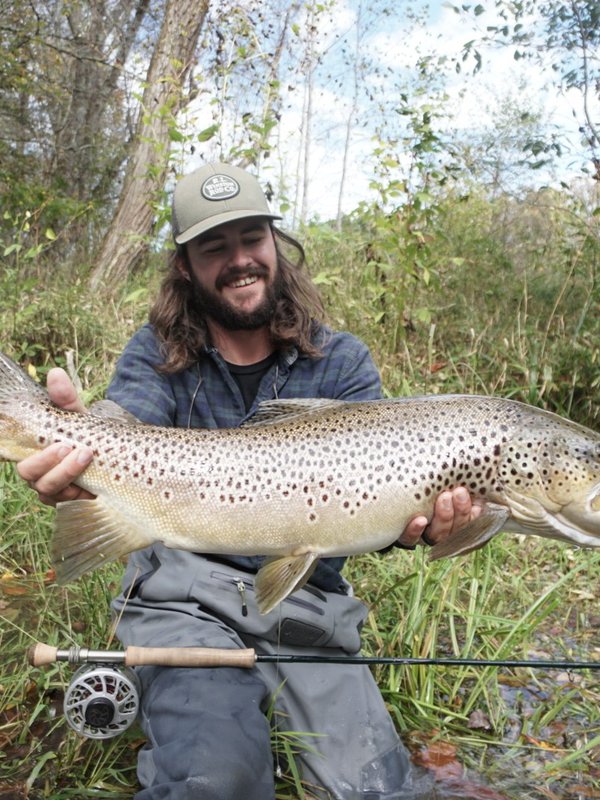
Photo opportunity. Striper photos are dramatic. Long fish, often held at the boat with the angler grinning. Bring camera or phone for the documentation.
Mixed catches. Occasionally striper trips produce other species — large rainbow or brown trout that ate the striper streamer, smallmouth bass, white bass. The mixed catch is part of the lower-river character.
Common Toccoa striper mistakes
Booking the wrong window. July striper trips do not work — fish are back in the lake. April peak is mid-month onward. Plan for late April through mid-May for highest percentages.
Trout gear for stripers. A 5-weight trout rod cannot handle a 12-pound striper. Dedicated 8–9 weight gear is required. Rent or use Bowman's gear; do not bring inadequate tackle.
Wading the upper river. Upper Toccoa wade access does not access striper water. The lower river is the striper zone, and drift boats are the appropriate format.
Expecting trout numbers. A striper trip is fewer-fish, bigger-fish. Anglers expecting 10+ fish per day are disappointed. Quality over quantity is the framing.
Mid-day light fishing. Like trophy browns, stripers feed best in low light and during generation. Mid-day bright sun is often slow.
Underestimating fight time. A striper run takes anglers into the backing. Drag must be set firmly, line cleared off the deck, and angler ready for sustained pressure. First-timers often lose fish in the first run.
Skipping the Georgia regulations check. Verify current rules — striper regulations occasionally adjust season-by-season.
Combining striper trips with trout trips
Some anglers combine striper trips with trout trips during the spring window:
Two-day combo: day 1 striper float on the lower river ($425), day 2 standard trout float on the upper river ($425). Total $850 for two complete days of different fishing.
Half-day striper + half-day trout: rare but possible — full-day with split focus. Logistical complexity makes this less common than full-day single-focus.
Striper trip with trout backup: if striper fishing is slow on trip day, the guide can shift focus to trout in nearby water. The flexibility comes with experienced guides.
For first-time striper anglers, a single dedicated half-day striper float is the right starting point. If the fishing produces, return for full-day or multi-day striper trips. If the fishing is slow, you have learned the format without a major commitment.
What experienced striper anglers do
Patterns from anglers who fish the Toccoa striper run annually:
They book May 1–25 specifically. Peak window is non-negotiable. Other fishing flexibility around it.
They use generation flow days. Heavy-generation days produce more striper opportunity than low-flow days. Tracking the USGS gauge and TVA schedule shapes trip timing.
They commit to full-day trips. Striper fishing rewards extended water coverage. Full-day floats produce more shots than half-day.
They book the same guides repeatedly. Striper fishing is guide-knowledge-intensive. The guide who put you on a 12-pound striper last year knows where to put you this year.
They tip generously after a successful trip. A guide who delivers a trophy striper deserves recognition. Cash, in an envelope, at the take-out.
They photograph quickly. Striper photos are dramatic but air time stresses the fish. 30 seconds of photo, fast release in the current.
They treat the fishery carefully. The Toccoa striper run depends on the migrating population returning year over year. Catch-and-release supports that.
How Toccoa stripers compare to other Georgia striper fisheries
For context on where the Toccoa fits in the Georgia striper landscape:
Lake Lanier: the most-famous Georgia striper fishery. Year-round striper opportunity in a large reservoir. Boat-based, conventional or fly. Larger total population than the Toccoa but lake-style fishing rather than river fishing.
Lake Allatoona: similar to Lanier but smaller. Also year-round striper fishery. Boat-based.
Chattahoochee River below Buford Dam: the closest river-based comparison to the Toccoa. Striper migration in spring up the Chattahoochee from Lake Lanier. Different river character but similar concept.
Coosa River system: historic striper waters. Less consistent than other options but produces.
Toccoa River: the lesser-known river-based striper opportunity. Smaller population than Lanier or Allatoona but underexploited and produces in specific April–June windows. River-character fishing rather than lake fishing.
The Toccoa is the right choice for fly anglers who want a river-based striper experience close to Atlanta during the spring window. Lake-based stripers are different fishing — not better or worse, just different format. For fly anglers who prefer river fishing, the Toccoa run is the obvious target.
Frequently Asked Questions
When is striper season on the Toccoa River?
April through June, peaking late April through May. The migration is triggered by water temperatures rising in the Toccoa. Earliest stripers appear in mid-April; peak fishing is roughly April 25 through May 25; declining numbers through early June. Off-season (July–March) means stripers are in Lake Blue Ridge, not the river.
How big are Toccoa River stripers?
8–15 pounds is the typical range during the spring run. Some 18+ pound fish are caught each year. Larger fish (20+ pound) are rare but possible. The size class is dramatically larger than the trout fishing — most anglers consider the trade-off (fewer fish, bigger fish) worth it.
What gear do I need for Toccoa striper fly fishing?
8- or 9-weight rod, sink-tip line, short heavy fluorocarbon leader (12–20 lb), 6–9 inch baitfish streamers. Fundamentally different from trout gear. Most casual freshwater anglers do not own this rig; Bowman supplies all gear on guided striper trips.
Can I wade fish for stripers on the Toccoa?
Generally no. Striper water is on the lower river where wade access is limited. Drift boat trips ($425 half-day, $575 full-day) reach the productive lies. Some experienced local anglers wade specific lower-river spots successfully but it is not the standard format.
How many stripers will I catch on a typical trip?
1–3 stripers on a successful trip. Some trips produce 0 fish; some produce 4+. The fishery is fewer-bigger-fish than trout fishing. The trade is real — anglers expecting trout-style numbers are disappointed; anglers prepared for quality-over-quantity find the trips rewarding.
How do I book a Toccoa striper trip?
Use the trip finder or call (706) 963-0435. Specify "striper trip" at booking. Provide target dates in the April–June window, half-day or full-day preference, and any specific water preferences. 50% deposit at booking holds the date.
Can I keep stripers from the Toccoa?
Standard Georgia regulations apply for daily creel and size limits — verify current rules at Georgia Wildlife regulations. Most fly anglers practice catch-and-release on Toccoa stripers to support the fishery. The migrating population needs to return to the lake post-spawn for the run to continue year over year.
Book a Toccoa striper trip
Spring season April-June. Use the trip finder or call (706) 963-0435.
Toccoa River or Find Your Trip →